
Leiden, 26-27 November 2026. Organized by: Diederik Halbertsma
For the conference program and registration, see the event page.
Ian Kuijt, University of Notre Dame – Department of Anthropology
Keynote: Resilience as a Nine Headed Hydra
In many ways the archaeology of resilience is a nine-headed Hydra. While the term resilience can be defined relatively easily, archaeologists struggle with the challenge of unbraiding the intertangled, multiple, ways in which communities or societies thrive, adapt, or collapse through time, when faced with challenges such as environmental change, increased food insecurity, or increased population pressure. The concept of resilience has been defined in many ways, with different temporal, cultural, and economic framings, and often with limited consideration of how these may, or may not, be materialized. In this discussion I argue that conversations about resilience are relational, requires us to talk about different archaeological approaches to time, to think about a range of social and cultural framings, to think about the biological and environmental conditions, such as population pressure, human adaptation to changing environmental circumstances, and to consider aspects of changing carrying capacity at different social scales. While archaeologists increasingly adopt and use the term resilience in our research, we have spent surprisingly little time pulling apart the intellectual heads of the archaeology of resilience. To be direct, we often fail to consider how people in the past approached daily subsistence and environmental challenges, explore the extent to which resilience can be identified and monitored by scholars, or reflect upon the impact of daily practices on the long-term evolutionary development of the household, the village, or archaeological region.
Dita Auzina, Leiden University – Faculty of Archaeology
Community-Based Monumentality as a Resilience Strategy: Case Studies from Southern Central America
Southern Central America (SCA), extending from Panama to Honduras, has historically been contrasted with Mesoamerica to the north and the Andes to the south. Its apparent lack of vertical architectural monumentality has often been associated with the absence of state-like social organisation, contributing to the region’s marginalisation in interpretations of the pre-Columbian Americas.
Yet SCA contains a remarkable diversity of elaborate stone constructions and earthen mound complexes whose creation required considerable technical knowledge, material transport and coordinated labour. These constructions frequently extended beyond strictly utilitarian purposes. Their potential significance becomes clearer when Indigenous relationships with other-than-human beings and forces are taken seriously, and archaeological evidence is examined alongside geoarchaeological and palaeoenvironmental data.
This paper proposes that, in SCA, monumentality could serve as a community-based resilience strategy within dynamic environments prone to volcanic eruptions, hurricanes and other recurring disturbances. Rather than representing wholly unexpected catastrophes, such events formed part of the conditions within which communities organised social life, maintained relationships with place and rebuilt their worlds.
Drawing on two case studies from central Nicaragua and Nicaragua’s Caribbean coast, I examine how collective construction, rebuilding and the repeated renewal of places contributed to adaptation and social regrouping following volcanic eruptions and recurrent hurricanes. These cases broaden comparative discussions of monumentality beyond verticality, centralised authority and elite power, highlighting instead its role in sustaining communities through environmental and social change.
Sean Desjardins, Groningen University – Faculty of Arts
Braiding Knowledge on Long-Term Inuit Subsistence Practices and Environmental Health in Amittuq, Nunavut, Arctic Canada
In the northern Foxe Basin region (Amittuq) of Nunavut, Arctic Canada, Inuit oral histories and archaeological evidence attest to a long-lasting, time-honored harvesting-knowledge system instrumental in ensuring food security, while also maintaining ecological balance. In this paper, we present the ongoing work (2024-present) of two sub-projects of the ERC-funded project TRACES, which seeks to merge (or “braid”) complementary elements of Western-scientific and Inuit traditional knowledge (ᐃᓄᐃᑦ ᖃᐅᔨᒪᔭᑐᖃᖏᑦ; Inuit Qaujimajatuqangit; ‘things long known to Inuit’) about long-term harvesting practices in Amittuq. In one work package, Inuit hunters document their harvests across all seasons using a purpose-designed smartphone app; in another, archaeological surveys and remote sensing fill in gaps in our knowledge of past Inuit harvesting practices, from ca. 1300 AD to present. Our goal is to co-create a spatio-temporal atlas of long-term animal-resource use in the region that can be used by local residents to (1) share and grow traditional knowledge, and (2) help shape more equitable harvesting governance and regulatory frameworks.
Gül Aktürk Hauser, Leiden University – Faculty of Archaeology
Transhumance in a Changing Climate: Resilience and Adaptation across Turkic Landscapes
Transhumance is a form of pastoralism characterized by the seasonal movement of livestock across ecological gradients. It encompasses interconnected practices and landscapes, including grazing systems, temporary and dispersed settlements, biodiversity, and living heritage expressed through traditional ecological knowledge, ritual calendars, and pastoral lifeways.
Through generations of experience, pastoral communities have developed strategies for adapting to climatic variability, drawing on observations of weather patterns, animal and plant behaviour, seasonal cycles, and pasture conditions. Practices such as rotational grazing, herd diversification, and the use of drought-tolerant species have contributed to the resilience of these systems.
Today, however, transhumance systems face increasing pressures from resource extraction, urban expansion, land abandonment, land-tenure conflicts, and inadequate policies, exacerbated by climate change. Rising temperatures, shifting precipitation patterns, and more frequent or intense extreme events, including droughts, floods, and landslides, threaten pastures, migration routes, seasonal settlements, and biodiversity. These environmental changes also place living heritage at risk by disrupting pastoral practices, eroding traditional ecological knowledge, and weakening customary institutions. Such challenges are particularly significant in regions where transhumance remains insufficiently documented, including the highland landscapes of Turkic countries. The Baku Declaration on Transhumance, adopted in Baku, Azerbaijan, on 25 June 2025, further underscores the importance of recognising and safeguarding these systems as heritage.
Against this background, this presentation examines the challenges facing transhumance systems and the factors that support their climate resilience across Turkic countries through a review of existing literature. It addresses the central question: To what extent, and under what conditions, do transhumance systems maintain their resilience to climate change across diverse ecological and socio-cultural contexts in Turkic countries? By synthesising existing research, the study identifies key adaptation strategies, structural barriers, knowledge gaps, and opportunities for strengthening resilience. It aims to contribute to wider scholarly debates on human–environment interactions and to inform practical approaches to safeguarding pastoral livelihoods, landscapes, and living heritage. The findings are intended to be relevant to pastoral communities, herder associations, municipal authorities, and international organisations working at the intersection of cultural heritage, environmental sustainability, and climate adaptation.
Aris Politopoulos, Leiden University – Faculty of Archaeology
Labour, Lives and Legacies: Building and Excavating Nineveh
Abstract t.b.c.
Jennifer Swerida, Leiden University – Faculty of Archaeology
Beyond Survival: Environmental Intermittency and Resilience in Bronze Age Arabia
In the hyper-arid landscapes of Arabia, archaeological studies of human resilience often treat aridity as a persistent environmental stress that past communities struggled to overcome. Within this framework, survival itself can become evidence of resilience, while stable oases are understood as the primary resource nodes that made settled life possible. Although oases were crucial to Bronze Age society and subsistence, this emphasis risks presenting both aridity and human responses to it as more stable than they were while simultaneously obscuring how communities engaged with resources and environmental variability across the wider landscape.
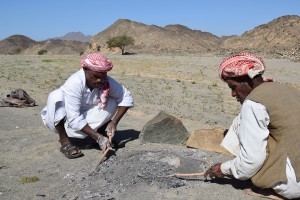
This paper introduces human interaction with environmental intermittency as a means of rethinking resilience in Arabia. Extended periods of hyper-aridity were punctuated by sudden inundations that rapidly redistributed water, sediment, and vegetation growth, and created irregular cycles of opportunity across the landscape. In premodern periods, such cycles shaped access to routes of movement, cultivable land, pasture, minerals, fuel, and game. The paper’s primary case study is Rakhat al-Madrh, a basin site approximately 7.5 km from the UNESCO World Heritage site of Bat in northwest Oman. Situated beside the Wadi al-Hijr but lacking direct groundwater access, the basin retains surface water following floods and functioned as an intermittent wetland during the Bronze Age. Archaeological and geomorphological research by the Bat Archaeological Project documents settlement, mortuary, and agropastoral activities at the site across the increasingly arid conditions of the third and early second millennia BCE.
Considering Rakhat al-Madrh alongside other locations around the Bat oasis, the paper examines how communities used places whose potential emerged through irregular and prolonged cycles of environmental intermittency. It argues that resilience depended not only on stable adaptations to aridity but also on recognizing and engaging flexibility with intermittent opportunities. This perspective moves beyond survival as evidenced of resilience and offers a more dynamic account of human resilience in extreme environments.
Bleda Düring, Leiden University – Faculty of Archaeology
Boom and Bust in the Sohar Hinterlands – Archaeological Data and Demographic Reconstructions
The landscapes of southeast Arabia are often perceived as clear examples of boom (irrigation systems and trade) and bust (collapse of both), resulting in marked differences in population levels through time. In this presentation I will ask how we can reconstruct population fluctuations through time in the Sohar hinterlands over the past six thousand years. This simple question is surprisingly difficult to answer on the basis of archaeological datasets. In this paper, drawing on the results of the Wadi al Jizzi Archaeological Project, I will consider archaeological footprints – or why certain periods are more difficult to find than others –, and then assess possible archaeological proxies for past demographies, including aggregate site areas, funerary data, and sherd counts. In this manner the paper will assess whether it is possible to formulate an estimate of past population densities and how they fluctuated over time, and if so, what kind of estimates can be put forward.
Nathaniel Erb-Satullo, University College London – Institute of Archaeology
Surviving the Crisis Years: Foundations of Societal Resilience in the Late Bronze Age Caucasus
Across much of Southwest Asia, the end of the Bronze Age heralded a major episode of collapse, reorganization, and transformation. Texts paint a vivid if partial account of these disruptions, whose archaeological signature includes everything from site abandonments and destruction to changes in material culture, craft production, and subsistence practices. By contrast, the societies of the South Caucasus in late 2nd and early 1st millennium BC display a high degree of cultural persistence atypical in a wider regional context. Drawing on a range of archaeological evidence, I consider what significant sociocultural transformation might look like in the mountainous, non-urban societies of the South Caucasus, and show how the significant transformations in South Caucasus prehistory occur considerably before, and well after, the Bronze Age-Iron Age transition. I argue that the region’s cultural persistence during this period cannot be attributed solely to a model of “splendid isolation” in which the region was disconnected and therefore insulated from wider Southwest Asian disruptions. Rather, I suggest that that careful examination of South Caucasus societies in the late 2nd millennium BC reveal evidence of systemic pressures, both external and internal, which merit analysis of the period through the lens of resilience. Lastly, I discuss several possibilities for why the South Caucasus weathered the Late Bronze Age collapse without a major period of reorganization, and reflect on the wider implications of this South Caucasus case study for global comparative studies of collapse and resilience.
Andrew Danielson, Harvard University – Department of Near Eastern Languages & Civilizations
A Tale of Two Wadis: Exploring Landscape and Settlement in the Highlands of Western Jordan
Recent archaeological research at the western edge of the highland plateau in central Jordan has revealed a complex pattern of human activity, particularly during periods of significant regional social and political change. This research, conducted in the Wadi Jadid and Wadi adh-Dhib regions, has identified a series of small yet noteworthy sites, with significant peaks in activity during the Early Bronze Age I (3600–3100 BCE) and early Iron Age (1150–950 BCE). Notably, these periods are marked by small-scale communities adapting to the transformation or dissolution of earlier social and political systems, and exhibiting a remarkable diversity of social experimentation. Situated at the heads of wadi systems within environmentally marginal and topographically challenging landscapes, these sites share a number of features: proximity to perennial water in the semi-arid region, opportunities for mixed subsistence regimes, and, in many cases, an emphasis on defensibility.
Of particular interest are the shared features, as well as key differences, between the sites of these two periods and the seeming intentionality behind settlement in what might otherwise be considered marginal landscapes. This paper draws together recent archaeological research at these sites, examining their settlement trajectories and subsistence strategies within the broader social and political contexts of each period. In doing so, it explores adaptation not simply as a response to environmental constraints, but as a product of social choice and experimentation in how communities organized themselves within a challenging landscape and in response to changing regional circumstances.
Bruce Routledge, University of Liverpool – Department of Archaeology, Classics and Egyptology
The Infrastructure of Resilience: Tells as Persistent Places in Landscapes of Mobility
Collective resilience is usually framed in terms of human institutions and practices. However, institutions and practices are always realised in a material setting. Hence landscapes are not just where humans are resilient, they are also a component of collective resilience itself. Archaeologists focused on hunters and gatherers have coined the term ‘persistent places’ in reference to locations that are intermittently visited in a manner that anchors seasonal or annual cycles of movement. Here emphasis is placed on continuity of practice as evidence of resilience in the face of change (i.e., climate). Ancient Near Eastern tells represent a very different sort of ‘persistent place’. Tell is an Arabic word referring to artificial mounds formed by the repeated settlement of people in the same place, usually over several millennia and often in cycles of settlement, abandonment and resettlement. Reuse and recycling are a particularly significant aspects of how people living on tells have interacted with their material past. Indeed, tells can be thought of as reuseable landscapes, repositories of infrastructure, building materials and collective memories that continually draw people back to them in order to be repurposed for at times radically different lifestyles and purposes. Tells lower the opportunity cost of shifting between sedentary and mobile, or low- and high-intensity, political economies. Using the example of Tell Dhiban in Jordan, this paper argues that tells anchor resilience into the landscape by facilitating change in human institutions and practices rather than continuity.
Douglas Baird, University of Liverpool – Department of Archaeology, Classics and Egyptology
Resilience and Adaptation in the Konya Plain, 14,000-6,000 cal BC
Abstract t.b.c.
Pascal Flohr, Leiden University – University Library
Moving on from ‘Collapse’ vs ‘Resilience’: Studying Early Farming Societies during the 8.2 ka Event in West Asia
The most extreme past climatic change documented during the Holocene (i.e. the past ca 11,700 years) took place around 6200 BCE, the so-called 8.2 ka event. Throughout the northern hemisphere, conditions became colder and more arid for around 160 years, although local environmental impacts will have differed. This relatively rapid change, with an onset of less than a decade, occurred during the Late Neolithic, a period during which mixed farming in combination with more mobile pastoral communities were being established in West Asia. Potential impacts on these societies have been interpreted as ‘collapse’ and decline, with decreasing population sizes due to starvation and migration to more favourable areas. In contrast, based on macro-scale (Southwest Asian-wide and regional) as well as micro-scale (i.e. site) high-resolution data, several colleagues and I have argued that these communities were resilient. In this paper, I would like to move on beyond the ‘collapse’ vs ‘resilience’ debate and look at how we can approach the study of the – likely – existing diversity in adaptation and resilience, using several well-studied areas/sites from the region.
Sajad Samii, Ankara Hacı Bayram Veli University – Department of Archaeology
From Inhabited house to Archaeological Record: An experimental Approach to Resilience and Adaptation in West Asian Vernacular Architecture
The resilience and adaptability of past societies are often reconstructed from static and fragmentary archaeological remains – the material traces of dynamic, gradual, and often invisible social and technological processes. This study seeks to develop an empirical approach to understanding these processes by drawing on field observations of contemporary vernacular architectural traditions in a mountainous and arid region of West Asia. The small, dispersed communities studied rely on livelihoods that combine agriculture, animal husbandry, gathering, and regional exchange. In response to water scarcity and seasonal variability in resource availability, they employ diverse adaptive strategies in construction technology, material selection, labour organization, and the intergenerational transmission of building knowledge. The coexistence of circular and oval architectural forms provides an empirical entry point into a long-standing debate in West Asian archaeology concerning the relationship between settlement form and social complexity. These communities, however, should not be regarded as direct survivors or “living fossils” of the past. Rather, they provide a comparative context in which hypotheses about processes in the more distant past can be formulated and tested. Building on these observations, the study moves beyond the description of construction techniques through controlled experimental reconstruction. Selected techniques are replicated to document and measure the material and spatial traces generated through construction, use, repair, abandonment, and collapse. The ultimate goal is to connect observable contemporary processes with the archaeological traces of similar processes preserved in the past, thereby developing a methodological framework for interpreting resilience and adaptation in prehistoric West Asian architecture.
DLshad Aziz Marf, University of Sulaimani, Archaeology Department, College of Humanities
Mountain Resilience in the Zagros: How Ancient Communities Endured Socio-Environmental Crises and Preserved Their Architectural Heritage
Through millennia, the inhabitants of the Zagros region have effectively leveraged their surroundings to construct a resilient architecture capable of withstanding severe natural disasters particularly floods and earthquakes, which posed the primary threats to both the local population and the natural landscape. This distinct architectural tradition served as a direct mechanism for environmental adaptation. Remarkably, the building materials and structural techniques utilized in the earliest agricultural settlements have endured for millennia, remaining visible in certain rural areas today. Likewise, the strategic positioning of cities, citadels, bridges, and fortifications was invariably a calculated response to both natural forces and Mesopotamian imperial expansions and siege tactics during the Bronze Age and the Iron Age.
This paper explores the concept of Mountain Resilience and examines how the severe, unpredictable environment of the Zagros Mountains characterized by harsh winters, flash floods, and seismic activity shaped ancient communities. It analyses how these populations developed unique resilient norms, adaptive behaviours, and indigenous anti-seismic techniques to create climate-responsive structures. By showcasing the mountaineers’ efforts to mitigate the impacts of natural disasters and military invasions through robust construction, this study demonstrates how such practices successfully preserved the millennia-old architectural heritage of the Zagros. Ultimately, these eco-friendly building traditions remain highly valuable, serving as sustainable models for both the contemporary Zagros region and the wider world.