
Book Specifications
IV, 303 pp.
softcover
2025 | Anatolica Volume 51 2025 ISSN: 0066-1554; 51
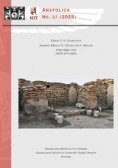
This study present preliminary results of the 2020 and 2022 excavations from Gre Fılla, located in the northern part of the Upper Tigris region. The settlement, located on the eastern bank of the Ambar Çay, covers an area of 0.7 hectares. The rescue excavations started in 2018 within the scope of the Ambar Dam Salvage Project, and ended in 2022, revealing a Pre-Pottery Neolithic (PPN) settlement on the northern border of the Upper Tigris region. The main occupation period, Pre-Pottery Neolithic, presents a series of levels dated between 9300–7500 cal. BCE. The rounded semi-subterranean pit-shelters from the Pre-Pottery Neolithic A were recovered in 2022. The structures dating to the Pre-Pottery Neolithic B are represented by communal monumental oval pit-structures surrounded by rectangular above-ground buildings, recovered in 2020–2021. The Pottery Neolithic period is represented only by isolated potsherds. — Özlem Ekinbaş Can
Kendale Hecala, situated at the northernmost edge of Mesopotamia, has been investigated throughout four seasons, revealing material culture from the Early Chalcolithic period and the Middle Ages. The architectural remains of the Early Chalcolithic occupation comprise single-room, multi-room, and grill-plan buildings, constructed by pisé walls with and without stone foundations. The settlement pattern has been documented over an extensive area, characterized by re-built dwellings throughout multiple phases, on top of each other, maintaining consistent orientations and layouts. The ceramic assemblage includes Ubaid Painted Ware; found in the same contexts with the Grit Tempered Ware, Dark-Faced Burnished Ware, Standard Ware, and Black Core Mineral Tempered Ware. The small finds demonstrate continuity, reflecting the architectural traditions, which show minimal variation over time. Although the settlement’s primary occupation phase dates to the Early Chalcolithic period, material culture displaying Late Neolithic characteristics dominates. The Middle Ages is represented by buildings with stone foundations, and infants buried in jars. The small finds include plain and glazed pottery and various metal artifacts. — Şakir Can, Şeyma Çiftçi
The Çadır Höyük mound is located in Yozgat province, south of the city of Sorgun. Excavations have spanned 30 years as of 2024, and have documented nearly constant occupation lasting six millennia, beginning in at least 5200 BCE until final abandonment in the thirteenth or fourteenth centuries CE. During these millennia there have been at least six major climate events, with a seventh occurring now, in the twenty-first century. Much of the work at Çadır Höyük focuses on how residents managed their economies and settlements during these past climate changes. Here we report on our 2023–2024 excavations and ethnographic work, presenting results of work on Late Chalcolithic, second millennium BCE, and Byzantine excavation areas. This report also includes discussion of the recent ethnographic work which focuses on documenting past and present farming traditions and techniques and the challenges local farmers face in today’s changing climate. — Sharon R. Steadman, Stephanie Selover, Jennifer C. Ross, Emrah Dinç, Anthony J. Lauricella, Laurel D. Hackley, Burcu Yıldırım, Deniz Erdem
The paper focuses on the architectural and stratigraphical analysis of two important areas of the Arslantepe Palace, a monumental public complex of the end of the fourth millennium BCE: the Audience Building and Temple B. Attention is drawn to the reconstruction of these imposing buildings, which is based on excavation data, including structural surveys updated with laser scanner measurements and a review of both horizontal and vertical stratifications to ensure a reliable reconstruction. Plans and sections illustrate elevations and roofing hypotheses, starting from the actual preserved remains. This paper presents a case study of reconstructive archaeology, carried out with an analytical approach and marked by a high degree of reliability due to the rigorous recovery and interpretation of meaningful archaeological data. — Elisa Biancifiori
The Middle Bronze Age in the South Caucasus has long been a subject of scholarly debate, particularly regarding the extent and character of nomadism in societies of this period. The necropolises are significantly more numerous than settlement sites and our knowledge of Middle Bronze Age settlements remains limited. To address this gap and critically examine theoretical frameworks around lifestyle and socio-economic organization during this era, we investigated the Lori Berd settlement in northern Armenia, which contains one of the region’s highest concentrations of Middle Bronze Age material.
Using geomagnetic surveys, analysis of excavated artifacts, and a re-assessment of previous excavations, our research uncovers evidence of a complex socio-economic transition in the Middle Bronze Age South Caucasus. The findings collectively support a model of year-round habitation that incorporates both agricultural and pastoral practices, challenging traditional views that emphasize transhumance as the primary economic structure of the region. By positioning Lori Berd within a wider network of Middle Bronze Age sites and associated necropolises, this study advances a more nuanced understanding of socio-economic organization, settlement architecture, and the interdependencies between craft production, livestock management, and landscape use in the South Caucasus. — Ruben Davtyan, Simone Arnhold, Burkart Ullrich, Noushig Zarikian
This article presents the contribution of ongoing excavations at Uşaklı Höyük to the study of consumption behaviors of Red Lustrous Wheelmade Ware (RLW) within the core region of the Hittite Empire in central northern Anatolia during the Late Bronze Age. Notably, these luxury, imported vessels, became an integral component of ceremonial practices from the Middle Hittite period onward, signaling a shift in pottery consumption patterns, particularly in relation to ritual behaviors.
Through a critical assessment of the impact of vessel use-life and site formation processes in shaping the RLW ceramic assemblage, and by adopting a critically engaged approach to quantification strategies, this study examines the incidence of RLW in relation to contemporary ceramic production across different functional contexts and settings where RLW is attested. Based on new data from Uşaklı Höyük, contextualized within the Hittite core area, the analysis highlights patterns of spatial distribution, depositional variability, and differential preservation. These factors contribute to a more refined understanding of RLW circulation and use within Hittite society.
While storage and discard contexts account for a substantial portion of the currently available evidence, the assemblage from Area F at Uşaklı Höyük offers an unprecedented perspective on a context of ‘active’ use within a specialized ritual setting. — Valentina Orsi, Anacleto D’Agostino
In the second to the early third century CE, nymphaea or monumental fountains became key symbols of Roman urbanism, reflecting the grandeur of Roman architectural and decorative traditions. Many of these fountains framed the dominant social order through sculptural programs of gods, goddesses, emperors, and the local elite, all set against the spectacular movement and sound of water. To keep up with the dynamic ideal of Roman cities, local civic authorities and the elite invested in these costly yet evocative structures. Although Sagalassos (southwest Anatolia) was a modest regional polis, it featured at least five such nymphaea, all of which are known to have had distinct sculptural programs. Despite significant political and religious changes, these fountains persisted into Late Antiquity, continuing to display reconfigured groups of statues. This paper explores the evolution of the Hadrianic Nymphaeum, a two-story monument of deep sacred significance, and its associated sculptures within the broader transformations of Sagalassos from the second to the sixth centuries CE. — Bas Beaujean, Jane Fejfer, Frans Dopere, Peter Talloen, Jeroen Poblome
When Constantinople became the capital of the Roman Empire, the previously established cities along the northwest–southeast routes that led to the new capital gained importance. Mainly used for the transport of goods, traders, travelers, and armies, these routes crossed Asia Minor diagonally and intersected at particular urban venues. One of the busiest routes in Late Antiquity was the pilgrim’s route, also known as the “Pilgrim’s Road,” which ran diagonally from Constantinople to the Cilician Gates. The cities established on the route during the Roman era facilitated travel, pilgrimage, and economic activities, thus keeping trade and communication between Constantinople and northern Syria alive in later periods. The Pilgrim’s Road, in this sense, was instrumental in maintaining the urban vitality of the cities located on the route. This paper takes the pilgrim’s route as a context to address its impact on urban vitality and continuity of the cities located along the route between the fourth and early seventh centuries CE, in reference to three major cities, Nicaea, Ancyra, and Tyana. — Tülin Kaya, Lale Özgenel
Systematic archaeological fieldwork in Türkiye, a country home to countless heritage places, has a more than century-long history. Unearthing this vast body of heritage places through archaeological excavations has relied on diverse sources of labor in the field which often escaped detailed scrutiny. While an indispensable element of the practice, the concept of labor in archaeology is something all participants know and experience inherently but rarely acknowledge. While scholarship has recently begun to acknowledge the ways in which archaeology has been practiced, a historical investigation into the matters of labor and the contribution of local communities has been further complicated by archival practices that often silence the voices of archaeology’s less fortunate laborers.
This article presents the results of an oral history research project that investigates the history of archaeological practice in Türkiye – a study that is not limited only to the issues of labor but also examines the establishment of archaeology as an academic discipline. The interviewees consisted of current or former directors of archaeological projects as well as other academic participants in archaeological fieldwork in Türkiye. The article identifies different kinds of archaeological labor utilized in the field based on the oral testimonies of the practitioners mentioned above and offers a broad taxonomy of workforce. The labor force in archaeological fieldwork comprised a variety of groups including convicted prisoners, migrant contingent farming laborers, and unpaid students. This article further elaborates on how labor has developed and transformed throughout the years in the second half of the twentieth century in Türkiye. — M. Kemal Baran
Full text of Anatolica articles available online at Peeters Online Journals (€ 14 per article).